Cleaning Moss Off a Flat or Low-Pitch Roof
You've probably got a flat or low-pitch roof somewhere on your house, even if the main roof is pitched. Think of the kitchen extension, the garage, the dormer, or the porch. These lower roofs cop a lot of moss and dirt, and because you rarely see them properly, they tend to get left until the water starts finding its way in.
Flat and low-pitch roofs have their own set of problems, and they don't respond the same way a steep slate roof does. Water sits on them, debris gathers, and moss takes hold quickly, especially in a damp spot like Chester. Cleaning them well takes a careful hand, because the surface is easy to damage and the drainage is easy to upset.
The quick answer: Flat and low-pitch roofs need gentle, careful cleaning that clears moss and debris without harming the covering or blocking the drainage.
1. Why Flat Roofs Grow So Much Moss
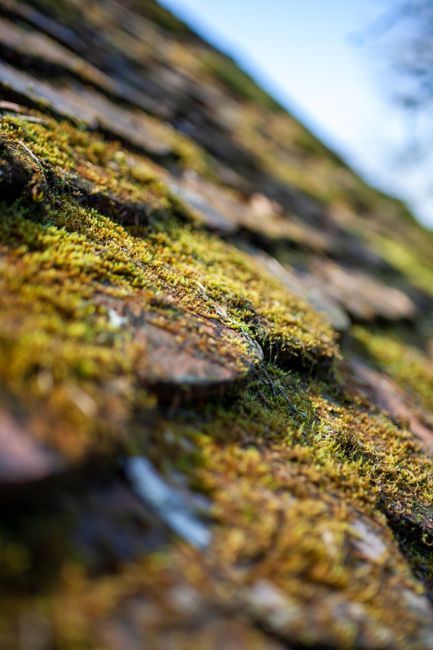
Water is the whole story. A pitched roof sheds rain fast, but a flat or low-pitch roof holds it, and any dip or worn patch turns into a shallow puddle that lingers for days. Moss and algae love that standing water, so a flat roof gives them the wettest, most welcoming home on the whole house.
Chester's climate makes it worse. With the damp air off the Dee and the steady rain that sits over the Cheshire plain, low roofs here rarely get the chance to dry out between showers. Add the leaves and grit that collect in the corners, and you've got the perfect bed for moss to spread across the surface.
2. The Damage Standing Water Does
Moss on a flat roof isn't just a surface problem, because it holds even more water against a covering that's already struggling to drain. That constant damp works away at the felt, the fibreglass, or the rubber membrane, and over time it lifts seams, softens the surface, and opens up the gaps where water gets in.
Once water breaches a flat roof, it spreads. There's no pitch to carry it off, so it tracks along under the covering and shows up as a damp patch some distance from where it actually got in. On a Chester extension or garage, a small unnoticed leak can soak the deck and the timber below long before you spot a stain on the ceiling.
3. Why You Can't Just Blast It Clean
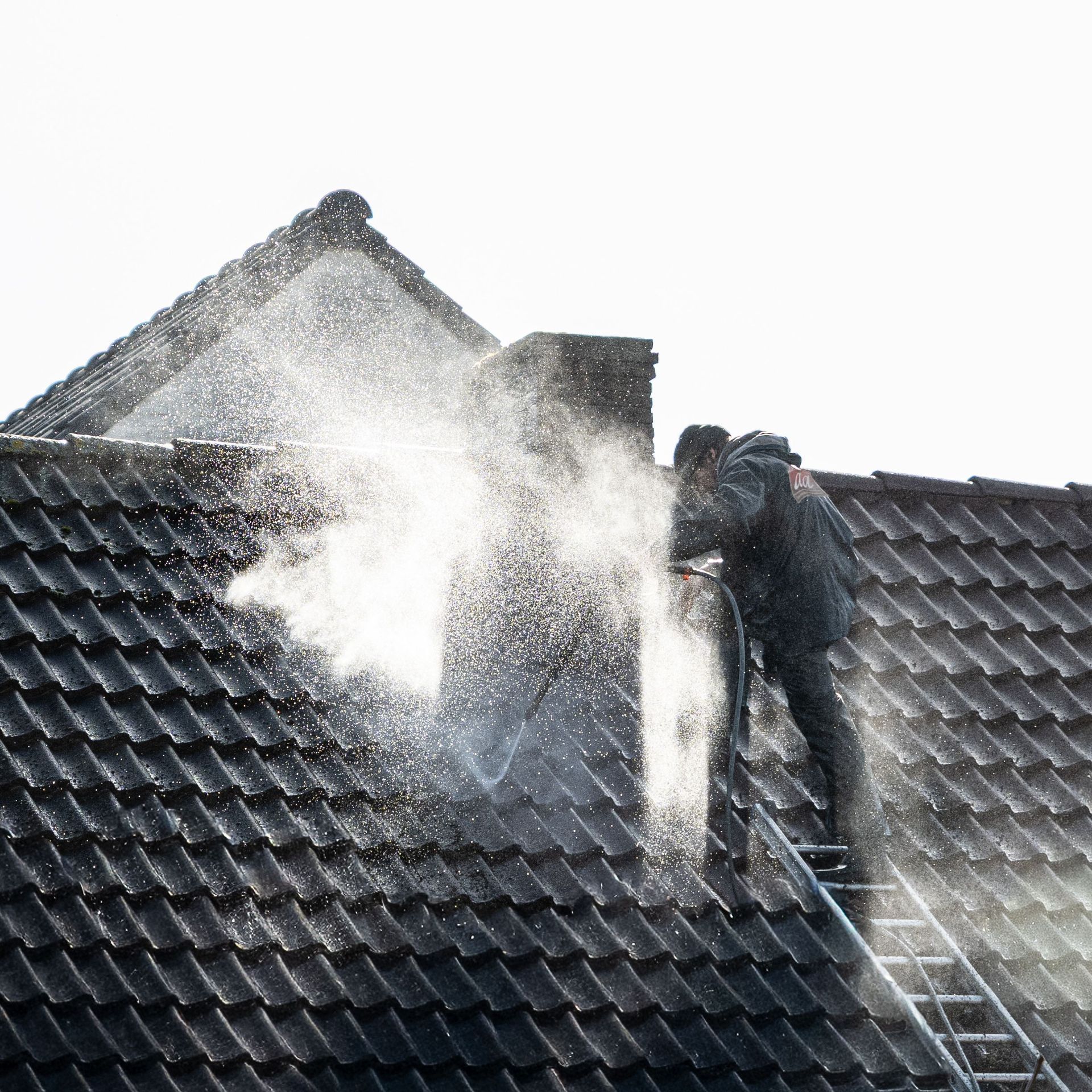
It's tempting to point a pressure washer at a flat roof and be done in ten minutes, but that's how covers get wrecked. Felt and membrane surfaces are far softer than slate, and a high-pressure jet tears at the seams, lifts the edges, and drives water straight under the covering. You'd trade a moss problem for a leak.
These roofs need a gentler touch. Loose moss and debris are cleared away carefully, and a suitable treatment deals with the growth without attacking the surface. On the flat roofs that sit over so many Chester kitchens and garages, that considered approach is the difference between a clean roof and a ruined one.
4. Clearing the Drainage Is Half the Job
A flat roof lives or dies by its drainage. There's usually an outlet or a gully that carries water off to the gutter, and if that clogs with moss and leaves, the water has nowhere to go and simply pools. Cleaning the surface without clearing the outlets leaves the real problem in place.
So a proper clean always includes the drainage points. The outlets get cleared, the flow gets checked, and any debris packed into the corners gets lifted out. With the amount of rain Chester sees, keeping that water moving off the roof is every bit as important as clearing the moss you can see on top.
5. Checking the Covering While You're There
Cleaning a flat roof is a good moment to check its condition, because you're right up close to a surface you almost never look at. Blisters in the felt, splits along a seam, lifting at the edges, or a soft, spongy patch underfoot all say the covering is starting to fail and needs watching.
Catching those signs early matters, especially through a Chester winter when a small fault turns into a real leak fast. A flat roof covering doesn't last forever, and knowing where it stands helps you plan ahead rather than getting caught out by water coming through the ceiling on the first cold, wet night.
6. Keeping a Low Roof Clear Long Term
Because they trap debris, flat and low-pitch roofs need looking at more regularly than a steep roof does. Leaves, grit, and moss all gather far quicker where the water doesn't run off, so a low roof under a tree can go from clear to clogged in a single autumn.
A regular clear keeps the surface free of the debris that feeds moss and blocks drainage. On a Chester house with an extension or a garage tucked in beside taller neighbours, that steady bit of upkeep is what stops a low roof quietly failing while you're busy looking after the main one above it.
- Standing water: Flat roofs hold rain, and that lingering damp is what feeds heavy moss growth.
- Covering damage: Trapped water works at felt and membrane seams until leaks open up.
- No pressure washing: High pressure tears soft flat-roof coverings and forces water underneath.
- Drainage: Clearing the outlets and gullies is as important as cleaning the surface.
- Regular checks: Low roofs trap debris fast and need clearing more often than pitched ones.
Frequently Asked Questions
Can you clean moss off a flat roof safely?
Yes, with the right gentle approach. Loose moss and debris are cleared carefully and a suitable treatment handles the growth, all without the high pressure that would damage the covering.
Why does my extension roof get so much greener than the main roof?
Because it's flat or low-pitch, so water sits on it instead of running off. That standing water, combined with Chester's damp air, gives moss the wet conditions it needs to spread quickly.
Will cleaning damage my felt or rubber roof?
Not when it's done properly. The danger comes from pressure washing, which tears soft coverings. A careful clean clears the growth while leaving the surface and its seams intact.
How often should a flat roof be cleaned?
More often than a pitched one, since debris gathers faster. A yearly clear is a sensible baseline, and a low roof under trees may need attention more than once a season.
What if you find the covering is failing?
You'd want to know sooner rather than later. Spotting blisters, splits or soft patches during a clean lets you plan a repair before a small fault becomes a leak through the ceiling.
Got a mossy extension or garage roof?
Ben's Roof Cleaning offers roof cleaning, moss removal and gutter cleaning across Chester and Cheshire, with over 15 years of experience. Get in touch or call 01244 207313
for a free, no-obligation quote.
Don't Let the Low Roof Be the Weak Spot
Flat and low-pitch roofs are easy to ignore precisely because you never really see them, but they're often the first part of a house to let water in. They trap moisture, grow moss fast, and need a gentle, careful clean that clears the surface and the drainage without harming the covering underneath. On the extensions, garages and porches dotted across Chester, keeping those low roofs clear and draining is one of the quieter ways to keep the whole house dry. Give the roof you can't see the same attention as the one you can.